

Key Takeaways
- Most pros mix 1–2 teaspoons of liquid dish soap into a gallon of water and use a squeegee for a streak-free finish — no fancy sprays required.
- High-quality squeegees with replaceable blades, T-bar scrubbers, and microfiber cloths form the core toolkit that makes all the difference.
- Pure-water systems using deionized water and water-fed poles became standard for multi-story and commercial buildings starting in the early 2000s.
- Technique matters as much as tools — overlapping squeegee strokes, figure-eight scrubbing motions, and working in shade prevent streaks and mineral deposits.
- DIYers can replicate 80–90% of professional results at home with affordable tools from hardware stores.
Meet the Pros Behind Professional Window Cleaning
Professional window cleaners are tradespeople who combine simple chemistry, quality tools, and disciplined technique to deliver spotless glass. You'll find them working residential routes, storefronts, low-rise offices, and high-rise buildings across every climate.
While regional habits vary — pure-water systems became mainstream in the US and UK after about 2005 — the core toolkit remains surprisingly consistent worldwide. Professional cleaners avoid shortcuts and rely on methods refined over decades.
This guide walks through the exact solutions, tools, and techniques professionals use so you can mirror them at home or better understand what you're paying for when you hire a service.
What Cleaning Solutions Do Professionals Really Use?
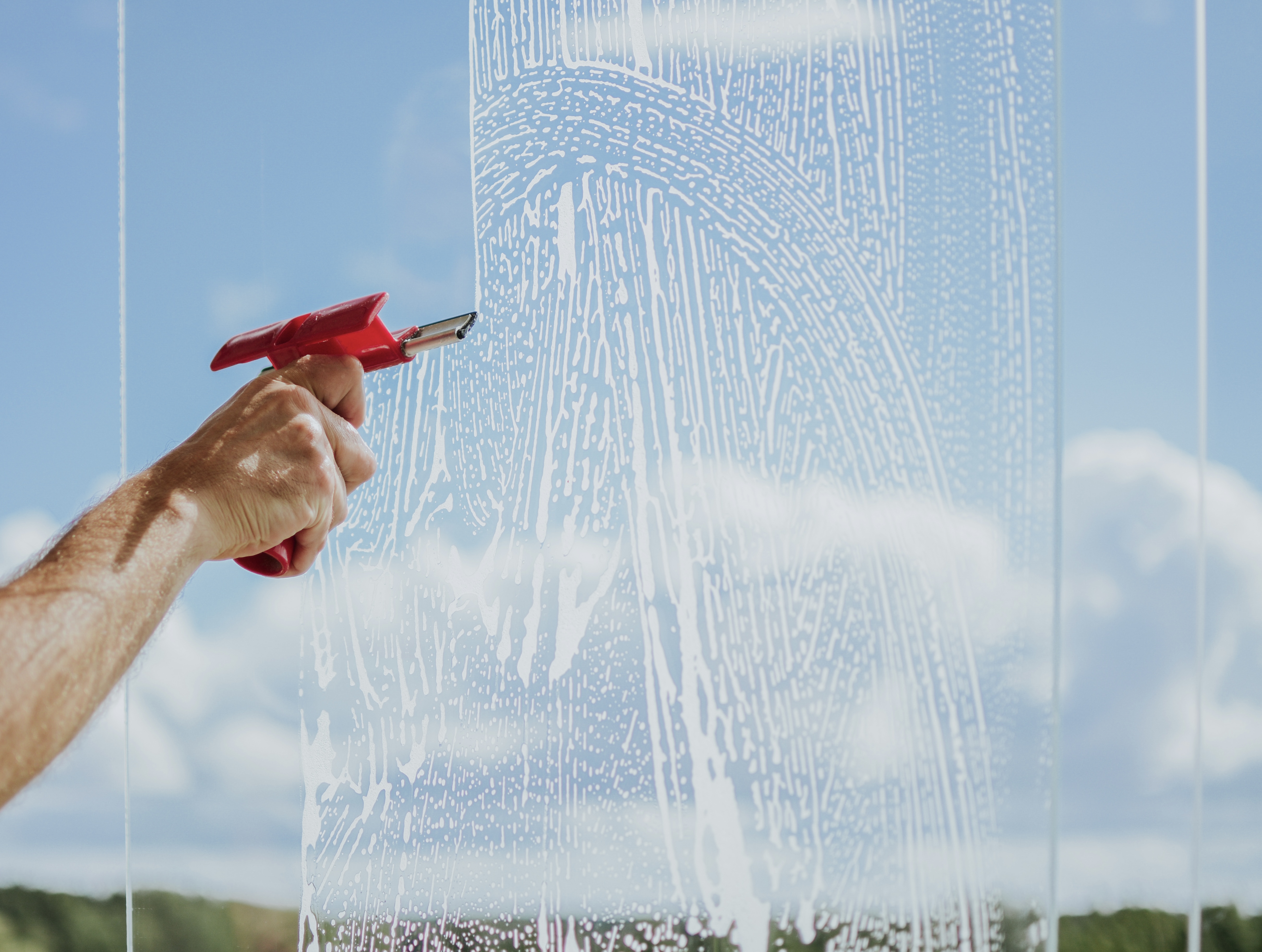
Most pros favor low-foaming, residue-free mixes they prepare fresh in a bucket on every job. Professional window cleaners often use a mixture of distilled or bottled water with dish soap to avoid streaks caused by minerals in tap water.
The standard professional window cleaning solution:
- 1–2 teaspoons of concentrated liquid dish soap per gallon (3.8 L) of cool or lukewarm water
- Mixed in a standard 5-gallon bucket
- Brands like Dawn or Joy are popular for their grease-cutting surfactants without excessive suds
Professionals often avoid ammonia-based cleaners, which can leave a sticky film that attracts dust. Glass sprays like Windex dry too quickly on sun-heated glass and can damage low-E coatings found on windows manufactured since the 1990s.
A vinegar-based cleaning solution, mixed with liquid dish soap and water, is also popular among professionals for its ability to cut through tough oil and grime, especially on windows with hard-water streaks. The typical ratio is one cup white vinegar plus one teaspoon dish soap per gallon of warm water.
Commercial concentrates come in 1-liter or 1-gallon jugs, diluted per label directions. Pros prefer these for added "slip" that improves squeegee glide without heavy fragrance or leaving residue.
For cold-weather cleaning, professionals recommend adding windshield washing solution to a soap mixture to prevent it from freezing on the glass — typically 10–20% of the mix when temperatures drop below 32°F (0°C).
DIY vs. Commercial Window Cleaning Solutions
The same basic chemistry works whether you're a homeowner or a pro. The big difference is consistency and buying in bulk. Professional cleaners purchase 55-gallon drums yielding 200+ gallons of mix, while homeowners work teaspoon by teaspoon.
For most homes, a dish soap solution handles 80–90% of cleaning needs at a fraction of the cost. Commercial surfactants shine on routes with heavy grease — restaurants, auto shops, and city storefronts where lipid buildup is 2–3× heavier.
Avoid mixing random household cleaners together. Stick to one clear recipe per bucket to prevent streaks and possible fumes.
Core Tools Professionals Use to Clean Windows
Almost all pros carry a standard kit: squeegee, scrubber, bucket, towels, and some way to reach high glass. High-quality squeegees and microfiber cloths are essential tools for professional window cleaning — the quality of these items has a bigger impact than brand names on spray bottles.
Everything listed here can be purchased at home centers or online, though pros often buy contractor-grade versions for durability.
Squeegees: The Non-Negotiable Pro Tool
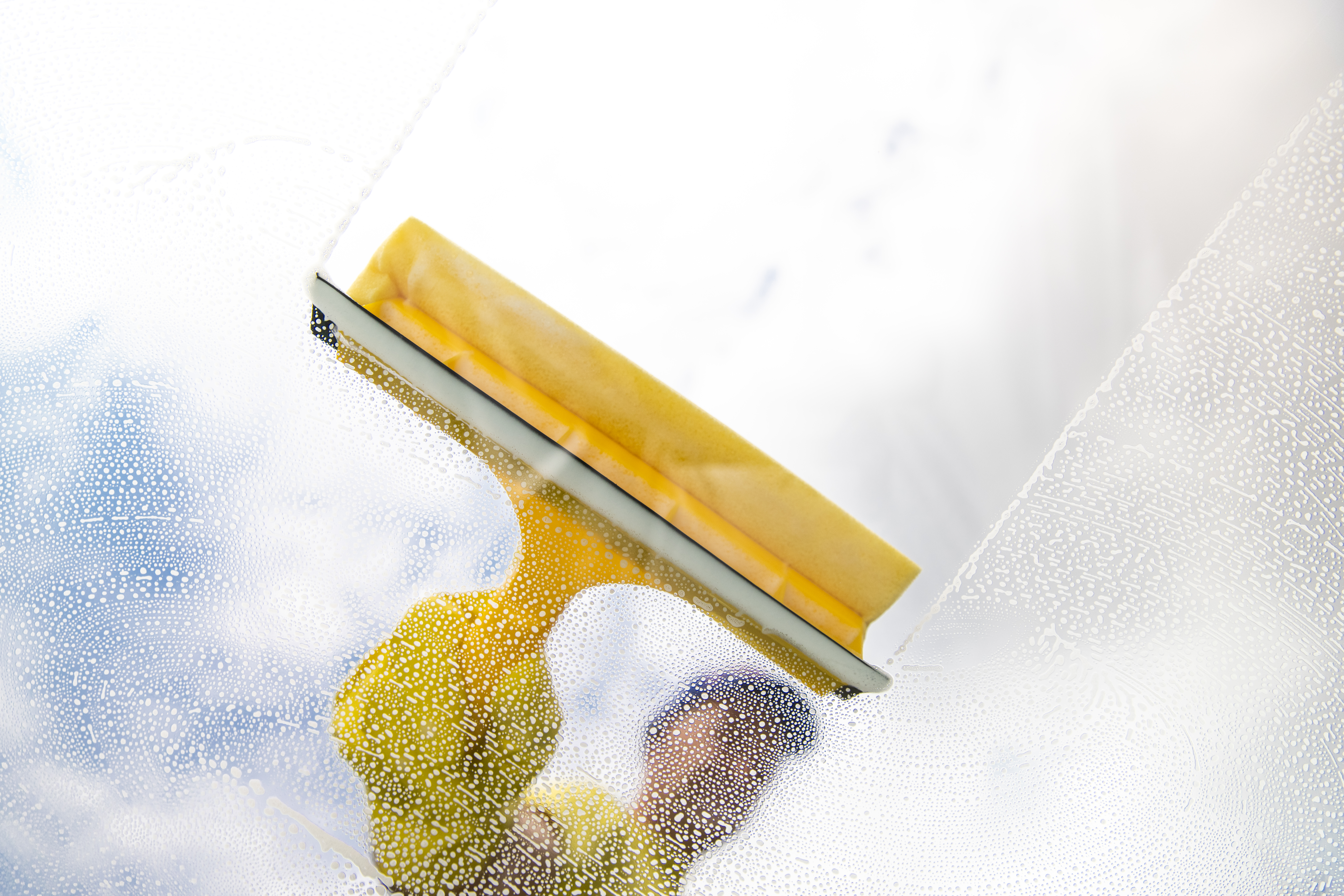
No professional kit is complete without a metal-channel squeegee with a high-quality rubber blade. A sturdy, well-built squeegee is essential for streak-free results and is available in various lengths.
Typical widths window cleaners use:
| Width | Best Use |
|---|---|
| 6–8 inch | Small panes, divided-light windows |
| 12 inch | Standard residential single-hung |
| 18–22 inch | Large panes, storefronts |
Rubber selection matters for a streak-free finish. Soft rubber (50–60 Shore A durometer) works better in cool conditions, conforming to imperfect glass. Harder rubber (70–80 Shore A) prevents skipping on hot, sunny exterior glass.
Pros replace or rotate the squeegee blade frequently — sometimes weekly on heavy routes — because even tiny nicks cause 70% of streaks. Keep extra blades on hand.
Scrubbers, Mops, and T-Bars
Scrubbers, often referred to as T-bars with sleeves, are effective for agitating dirt and grime from windows, typically made of microfiber or synthetic wool. A typical scrubber features an aluminum or plastic T-bar with a removable sleeve that fits in the bucket.
Pros saturate the sleeve in their cleaning solution, then wring slightly so it doesn't drip excessively — about 50–70% moisture retention. Sleeve materials vary:
- Microfiber for residential detail work (99% dirt capture)
- Tougher synthetic or wool-blend sleeves for greasy commercial glass
- Abrasive end pads for breaking up bird droppings without scratching
Extension Poles and Ladders
Safe access is mandatory. Extension poles allow professional window cleaners to reach high or hard-to-access windows without the need for ladders, enhancing safety and convenience.
Common extension pole lengths:
- 4–8 feet for ground-floor transoms
- 12–24 feet for second-story windows on homes built after about 1990
Tools lock into angle adapters on the pole to reach awkward glass above porches or conservatories. When ladders are necessary, pros use a ladder stabilizer and follow OSHA guidelines for proper footing.
Detailing Cloths: Microfiber and Cotton Towels
After squeegeeing, pros use lint-free cloths to wipe edges, corners, and small drips. Microfiber towels are crucial for wiping up drips and detailing edges, providing high absorbency and streak-free performance for finishing touches.
Key distinctions:
- Microfiber cloths (300–400 GSM): high absorbency, absorbing 7× their weight in water
- Cotton huck towels: traditional window cleaner choice, lint-free when washed properly
Towels are washed without fabric softener to keep fibers absorbent and avoid streak-inducing residue. Pros fold them into quarters so they can flip to a clean side as they work around each pane.
Advanced Equipment Pros Use for Larger or Tricky Jobs
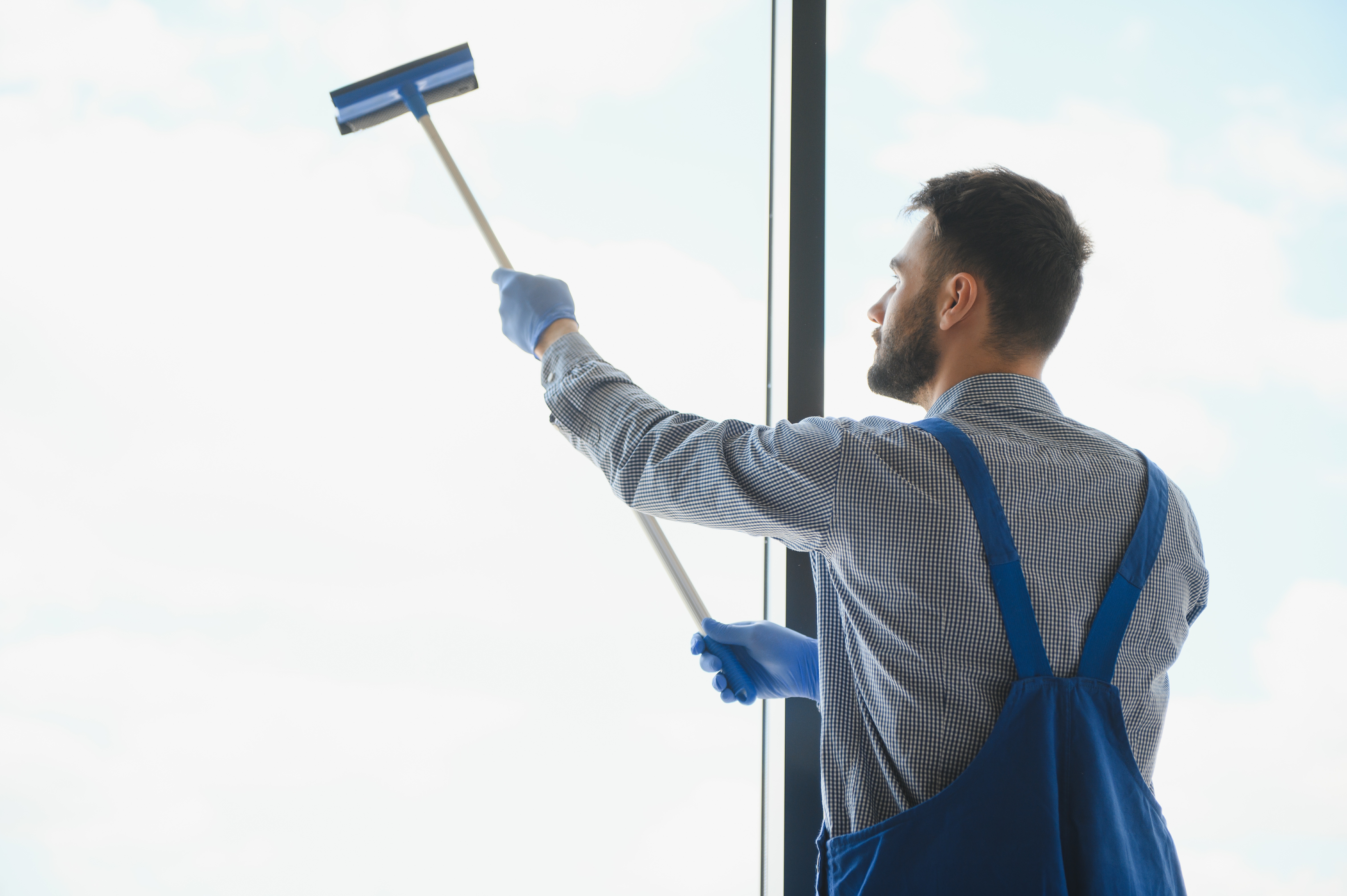
Commercial and multi-story work often requires specialized equipment beyond the basic squeegee and bucket. Homeowners don't need all this gear but may see it used on office buildings, schools, and apartment complexes — much like the work done by commercial window cleaning teams across Chicago and the suburbs.
Water-Fed Poles and Pure Water Systems
Water-fed poles are telescoping poles (often 25–60 feet) with a soft brush head that deliver filtered water directly to the glass. Water-fed pole systems are utilized for purifying tap water to prevent spotting on windows.
Pure-water systems use deionization and/or reverse osmosis to strip minerals like calcium and magnesium. This allows windows to air-dry without spotting — no squeegee needed at height.
This method became widely used in professional window cleaning from the early 2000s onward for outside window cleaning up to 3–4 stories without ladders. Pros use soft-bristled brushes on these poles to remove dirt, then rinse thoroughly with deionized water.
Scrapers and Steel Wool for Stubborn Debris
Pros carry razor-blade scrapers (typically 1–3 inch blades with safety covers) for removing paint specks, stickers, and construction residue. They check glass type first — avoiding tempered glass with fabrication debris — and keep the surface wet when scraping.
For mineral deposits and baked-on grime, a steel-wool pad (#0000 ultra-fine) or non-scratch scrub pads work on standard glass. Test an inconspicuous area first to ensure no scratching occurs.
Buckets, Belts, and Tool Storage
The traditional rectangular 18–20 inch bucket fits full-width scrubbers and squeegees. "Bucket on a belt" systems clipped to a worker's waist hold a small amount of solution plus a couple of squeegees and a scrubber.
Tool belts keep scrapers, microfiber towels, and the right tools handy, reducing ladder trips by up to 60% and creating quick work of each job.
How Professionals Actually Clean Windows Step by Step

Results come from a repeatable method. Professional window cleaning commonly utilizes a systematic "wet, swipe, and detail" approach: prepare, scrub, squeegee, then detail.
Cleaning professionals start from the top and work downwards to prevent dirty water from dripping on already cleaned sections. For a deeper walk-through, see our guide to the ultimate window washing pro tips for a streak-free shine.
Preparing the Glass and Surroundings
Before cleaning windows, professionals typically remove loose debris and dust using a dry brush or vacuum to avoid muddy streaks. Remove screens first and set them aside for separate wash.
Preparation checklist:
- Remove dust from sills, tracks, and frames
- Protect interior floors with drop cloths
- Start on the shady side of the building or work early morning to avoid rapid evaporation on a sunny day
Scrubbing and Squeegeeing Like a Pro
Load the scrubber in the bucket, then make overlapping passes on the glass to cover every inch with solution. This helps remove grime and scrub away buildup.
The "cutting in" move creates a dry border at the top that stops drips. To achieve a streak-free finish, professionals recommend using a squeegee with the upper edge ahead of the lower edge while pulling it across the glass.
Standard squeegee techniques:
- Straight-down pulls on small panes
- Fanning or S-strokes on larger panes
- Wipe the rubber blade with a towel after each pass to eliminate streaks
Detailing Edges, Frames, and Sills
Once the main glass surface is dry, run a folded microfiber cloth around the edges to catch excess water. Check corners and lower edges carefully — small drips appear as streaks later.
Wipe frames, sills, and tracks to remove dirty runoff and deliver a deep clean. Pros often finish interior and exterior sides in pairs to spot smudges from the opposite side.
Pro-Level Techniques for Streak-Free Windows

These insider tips separate a quick wash from professional results and a streak-free shine.
Choosing and Managing Water Quality
Many pros prefer softened, distilled, or filtered water when local tap is very hard. Mineral-laden water leaves spots and faint streaks and mineral deposits, especially in sunny conditions. Homeowners can use inexpensive distilled water from a grocery store — an excellent choice for final rinses.
Movement Patterns: From Figure Eights to Overlapping Strokes
When cleaning windows, professionals advise using a figure-eight motion to cover more surface area and avoid leaving streaks. Avoid tight circular motions with cloths, which create swirl marks visible in bright light.
Overlapping each pass slightly and maintaining steady pressure are key to best results. If you've been struggling with streaks at home, our breakdown of DIY mistakes that cause streaks covers the most common culprits.
Drying and Final Touches
Let glass air-dry briefly after squeegeeing before checking for haze. Use a clean, dry microfiber to buff out any light film. Pros do a final walk-around from different angles to spot missed smudges — never skip this step to rinse your work with fresh eyes.
When to DIY and When to Hire a Professional
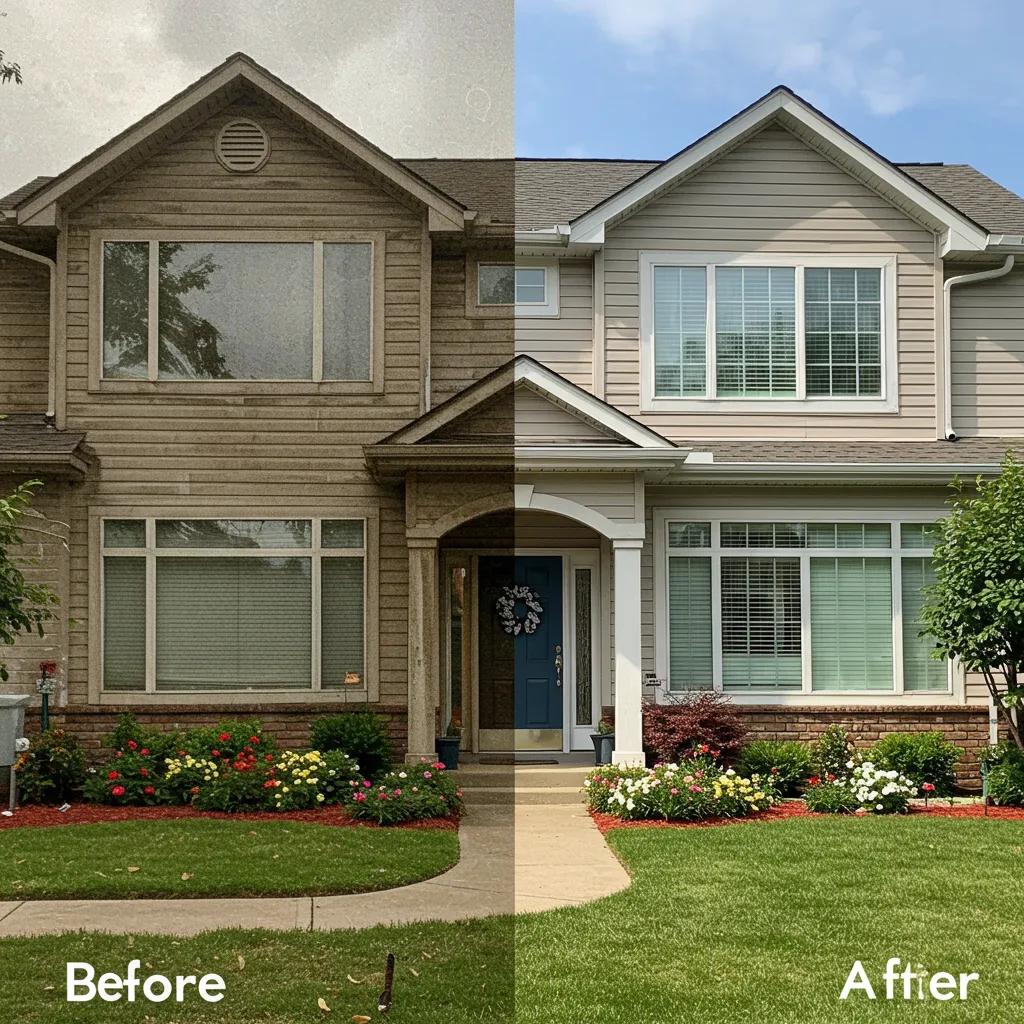
Many homeowners can handle ground-floor windows with the tools and methods described. Cost-effective DIY solutions work well for accessible glass.
Safety, access, and time are the main reasons people hire professional cleaners — especially for multi-story homes with large glass areas. Typical service patterns include annual deep cleans plus light touch-ups in spring or fall. For more on the right schedule, see our guide on how often you should clean your windows.
Use professional services for very high, awkward, or heavily soiled windows, skylights, and post-construction cleanup.
What Pros Bring Beyond Tools
Professional window cleaners bring insurance, safety training, and experience recognizing glass types and seal failures. They spot issues like failed double-pane seals (affecting 10–15% of windows after 10 years), frame rot, or damaged caulking.
Established businesses use standardized processes so every pane gets the same thorough treatment. Expect 2–4 hours for a typical 20–30 window home, depending on access and condition.
If you'd like a free estimate from a fully insured local team, you can request a quote here.
FAQ
What is the exact soap-to-water ratio professionals recommend for homeowners?
One of the most common and effective window cleaning solutions used by professionals is a mixture of dish soap and water, typically one gallon of water mixed with two teaspoons of liquid dish soap. Adding more soap doesn't clean better — it just increases residue and streaking.
How often should residential windows be professionally cleaned?
Most homes do well with professional cleaning once or twice a year, often in spring and fall. Homes near busy roads, oceans, or lots of trees and pollen may benefit from quarterly exterior cleaning to remove dirt and environmental buildup.
Can I use household glass cleaner with a squeegee like the pros?
Traditional spray glass cleaners are designed for small areas and paper towels, not for squeegees and large panes. Use a bucket solution with a scrubber and squeegee for best results on standard windows.
Is vinegar safe on all types of window glass?
Diluted white vinegar is generally safe for uncoated, standard glass. However, test an inconspicuous area first on low-E, tinted, or self-cleaning glass installed in the 2000s and later. Check manufacturer guidelines when uncertain.
How do professionals avoid lint and fuzz on freshly cleaned windows?
Pros use lint-free microfiber or huck towels, wash them separately, and avoid fabric softeners and dryer sheets. They retire cloths that start to shed and keep separate microfiber cloths for glass only — never for dusty or greasy surfaces where they might pick up debris.